About Our Laboratory
To all those interested in research on [Aging], [Environment], [Skin Care], and [Disease].
Our skin is the last line of defense separating "self" from "non-self." As such, it is constantly subjected to tremendous stress from the surrounding environment, sustaining damage on a daily basis.
Even under such harsh daily conditions, our skin cannot overcome the progression of time, and aging advances day by day.
Both the "environment" and "aging" affect various tissues and organs in the human body, including the skin, leading to cosmetic problems and the onset of diseases.
If you are interested, please come visit us. We are sure you will find something meaningful here.
Topics
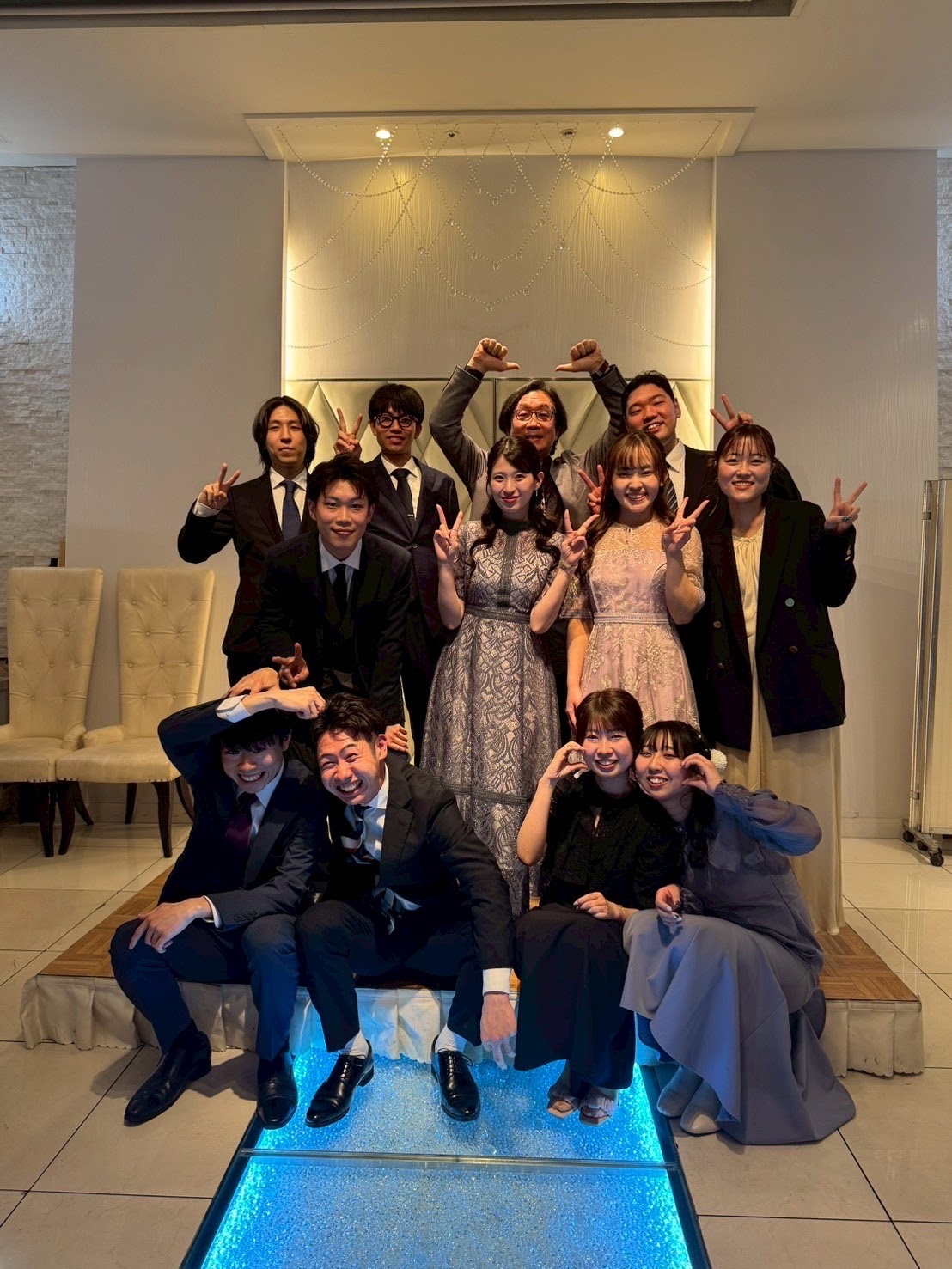
Congratulations on Your Graduation!
Congratulations to all 4th-year undergraduates and M2 students on your graduation! Your hard work will surely play a significant role in each of your lives. Best wishes for the future!
Master's Thesis Presentations
The master's thesis presentations for 2nd-year graduate students were held. They delivered excellent presentations showcasing the results of their two years of research.
Comprehensive Research II (Graduation Thesis Presentations)
Five 4th-year undergraduate students presented their Comprehensive Research II (graduation theses). All students gave excellent presentations.
Open Campus
An open campus event was held at the Omiya Campus. Many high school students and parents visited, supported by our laboratory members.
Comprehensive Research I (Mid-term Presentations)
Five 4th-year undergraduate students presented their Comprehensive Research I (mid-term presentations). Great job everyone on your progress so far!
Paper Published
A paper on the anti-tumor effects of ACR (acyclic retinoid) on cisplatin-resistant lung cancer cells was published in Anticancer Research.
Master's Thesis Presentations
The master's thesis presentations for three 2nd-year graduate students were held. Their presentations demonstrated remarkable growth over three years since joining the lab.
Comprehensive Research II (Graduation Thesis Presentations)
Eight 4th-year undergraduate students presented their Comprehensive Research II (graduation theses). All delivered excellent presentations.
Research Themes
Research 1: Cancer Prevention and Treatment
We are developing strategies against drug-resistant cancer cells and new therapeutic agents, focusing on skin cancers (melanoma, squamous cell carcinoma) and internal organ cancers.
Research 2: Skin Whitening and Leukoderma
We are elucidating the mechanisms of UV-induced pigmentation (age spots and freckles) and developing new methods for proper melanin pigment control.
Research 3: Arsenic Toxicity
We are tackling the arsenic contamination problem affecting approximately 200 million people worldwide, developing preventive and therapeutic agents for arsenic-induced carcinogenesis.
Research Purpose
To investigate cosmetic problems and disease onset caused by the environment and aging, and to elucidate their mechanisms.
To contribute, even in small ways, to prevention and treatment.
This is the future that the Molecular and Cellular Toxicology Laboratory (MCT-Lab.) strives for.
At MCT-Lab., we conduct diverse research using the knowledge and techniques of life sciences, biology, toxicology, and biomedical sciences.
Studying the skin. Studying cancer. Studying the environment.
The Molecular and Cellular Toxicology Laboratory conducts research centered on dermatological science, oncology, and toxicology (environmental toxicology).
[Dermatological Science Research]
Using methods that analyze the structure and function of the skin, we conduct research to address health issues from a cosmetic perspective, such as age spots, freckles, and wrinkles induced by ultraviolet radiation. We also work to elucidate the mechanisms behind various skin cancers (melanoma, squamous cell carcinoma, basal cell carcinoma, etc.) and develop preventive and therapeutic agents.
[Oncology Research]
In addition to skin cancer, we also tackle research on internal organ cancers such as lung cancer and liver cancer. In particular, we focus on preventing recurrence and side effects caused by drug-resistant cells that no longer respond to existing anticancer drugs.
[Toxicology (Environmental Toxicology)]
Although introduced last, ultimately all life in this universe cannot escape the influence of the "environment." As long as the environment exists, everything within it (ultraviolet radiation, noise, chemical substances, etc.) assaults us. Ultraviolet radiation is one of the most familiar environmental factors, particularly affecting the skin in various ways. Neither cosmetic issues nor diseases can be discussed without considering these environmental factors. Additionally, arsenic contamination, which is said to affect more than 200 million people worldwide, is one of the most serious environmental health issues. Arsenic, a toxin permanently present in drinking water, causes various cancers including skin cancer, as well as neurological disorders, diabetes, and other diseases through long-term consumption. Our goal is to research the health problems caused by environmental factors such as ultraviolet radiation and arsenic, and to contribute to their prevention and treatment.
Logs
Paper Published - Anticancer Research
A research paper on the anti-tumor effects of ACR (Acyclic retinoid) on cisplatin-resistant lung cancer cells was published. PubMed
Conference Presentation - Molecular Biology Society of Japan
One 1st-year and one 2nd-year master's student presented at the Molecular Biology Society of Japan annual meeting.
Conference Presentation - Japanese Biochemical Society
Five 1st-year master's students presented at the Japanese Biochemical Society annual meeting.
Paper Published - American Journal of Cancer Research
A paper on the suppressive effects of Calcitriol (activated Vitamin D) on arsenic-induced carcinogenesis was published. PubMed / EurekAlert / SIT News
Conference Presentation - 45th Annual Meeting of the Molecular Biology Society of Japan
Two graduate students gave poster presentations.
Award - SEATUC International Symposium 2022
Ryota Mofuku received the Innovative Poster Award Gold Medal, and Moeka Togo received the Silver Medal.
Paper Published - Development
Discovery of a new mechanism in melanocyte differentiation (collaborative research with Institut Curie, France). PubMed
Conference Presentation - 44th Annual Meeting of the Molecular Biology Society of Japan
Four graduate students gave poster presentations at the annual meeting held in Yokohama.
KAKENHI Grant Awarded
Received notification of a Grant-in-Aid for Scientific Research (Challenging Exploratory Research) from JSPS.
Laboratory Established
Ichirou Yajima joined the Department of Life Sciences, College of Systems Engineering and Science, Shibaura Institute of Technology. The Molecular and Cellular Toxicology Laboratory was established.