Research ③
Arsenic Toxicity
200 million people are exposed to arsenic toxicity.
Arsenic contamination is preventing access to "safe water."
In Japan, safe and clean water is readily available as a matter of course. However, when we look at the world as a whole, the geographic areas where "safe water" can be easily obtained are actually very limited.
One of the reasons preventing access to safe water is "arsenic contamination of water supplies." For example, contaminated regions exist worldwide, including Asian regions such as Bangladesh and India, South American regions such as Chile and Argentina, and various African nations. Contamination of drinking well water is particularly severe, and in some areas, the situation where "there is no potable water within a 20 km radius of the well" forces the local population to drink arsenic-contaminated water out of necessity.
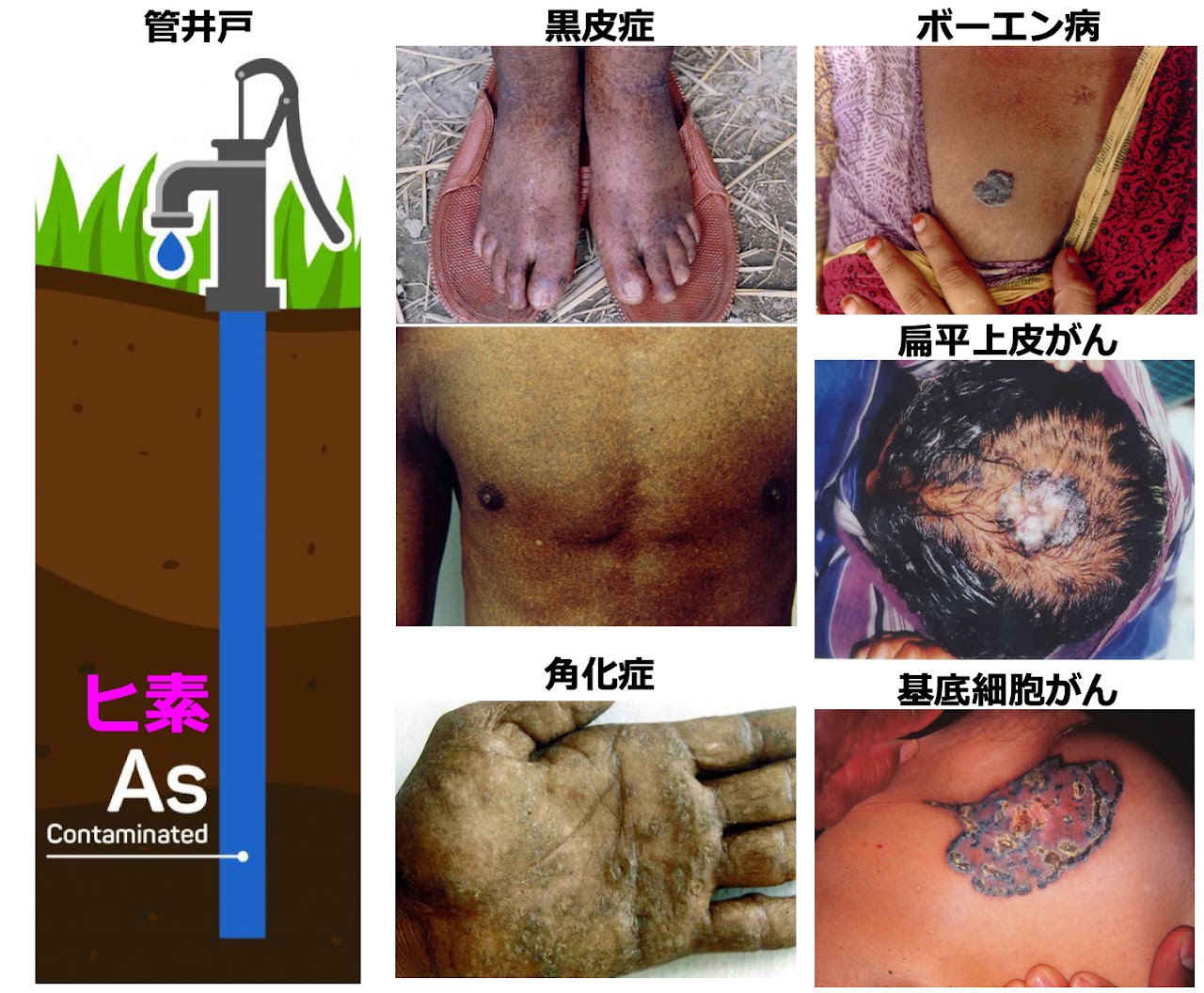
In most cases, what makes the problem so severe is that "the arsenic concentration is not high enough to cause immediate symptoms upon consumption." When people have no other water to drink and do not feel ill right away, they continue drinking it. As a result, they enter a state of "chronic exposure," eventually developing various diseases. These symptoms are collectively referred to as "chronic arsenicosis."
Chronic arsenic exposure through drinking water induces various cancers including skin cancer, lung cancer, and bladder cancer, as well as decreased birth rates, diabetes, and neurological disorders, threatening not just people's health but their very lives.
Working toward even a little prevention and treatment of chronic arsenicosis.
In our laboratory, we are addressing this global environmental health problem through both "prevention" and "treatment" approaches. Targeting arsenic-induced carcinogenesis, particularly skin cancers such as squamous cell carcinoma and basal cell carcinoma, we leverage our accumulated cancer research expertise to pursue the goals of "preventing cancer from developing" and "enabling prompt treatment even when cancer does develop," through the development of preventive and therapeutic drugs using "low-molecular-weight peptides" and "low-molecular-weight compounds."