Research ①
Preventing and treating cancer.
In Japan, one in two people will be diagnosed with cancer during their lifetime. One in four will die from cancer (based on National Cancer Center data from 2018 and 2019). ...With numbers like these, there's no way we can just sit back and not study cancer. We have to help everyone!
The causes of cancer vary from person to person. Broadly speaking, they can be divided into "genetic factors" and "environmental factors." In simple terms, cancer is caused by a combination of the traits you are born with and the environment you grow up in.
In our laboratory, we conduct research on various types of cancer, including skin cancer, lung cancer, and liver cancer.
Environmental "toxins" cause cancer in humans.
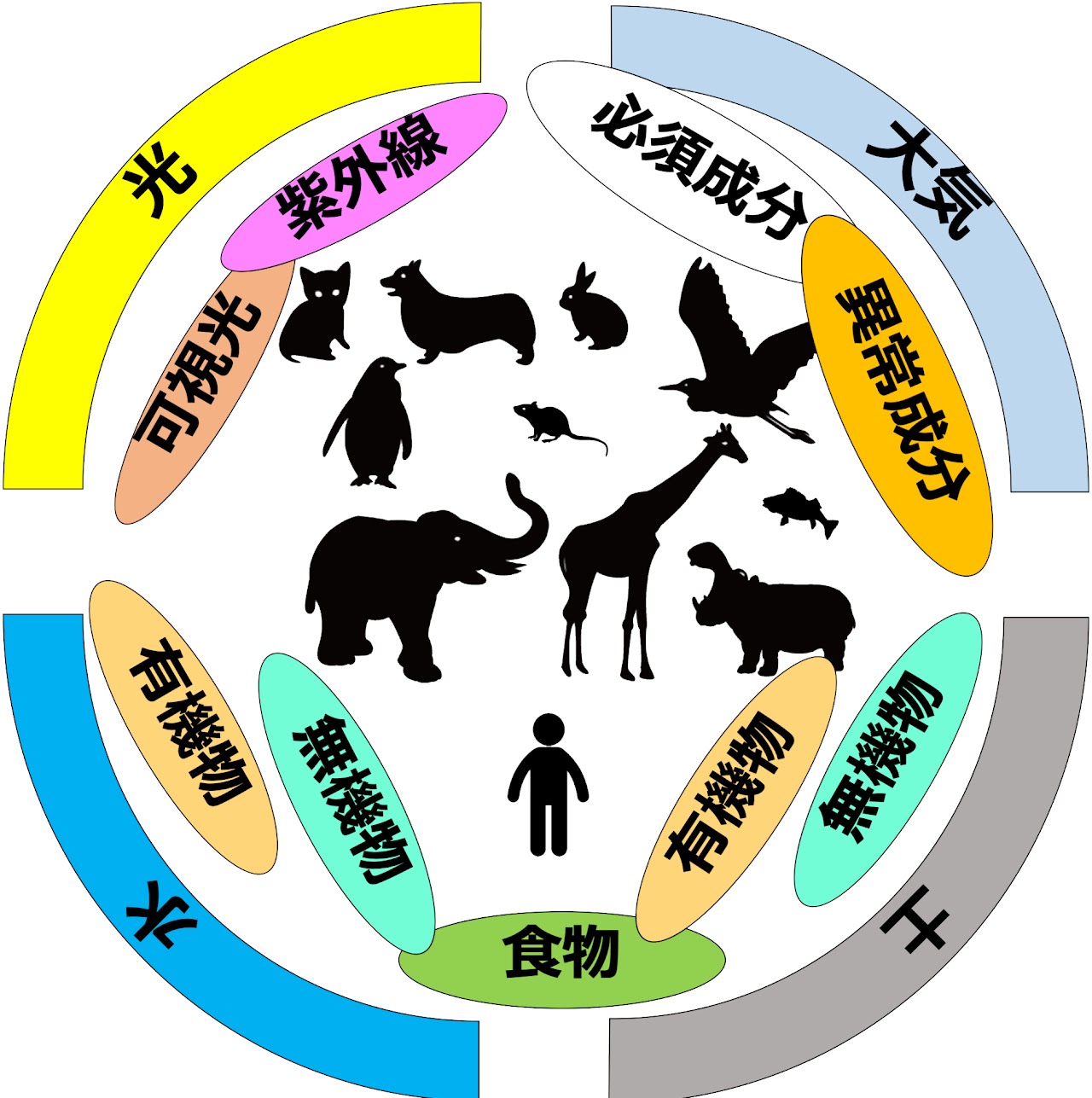
All living things are constantly exposed to the "environment." The environment is always present around us. The various components contained in the environment are called "environmental factors." And all living things are affected by these environmental factors.
We aim to elucidate how various "toxic" components contained in the environment affect humans and other living organisms.
Environmental factors induce cancer.
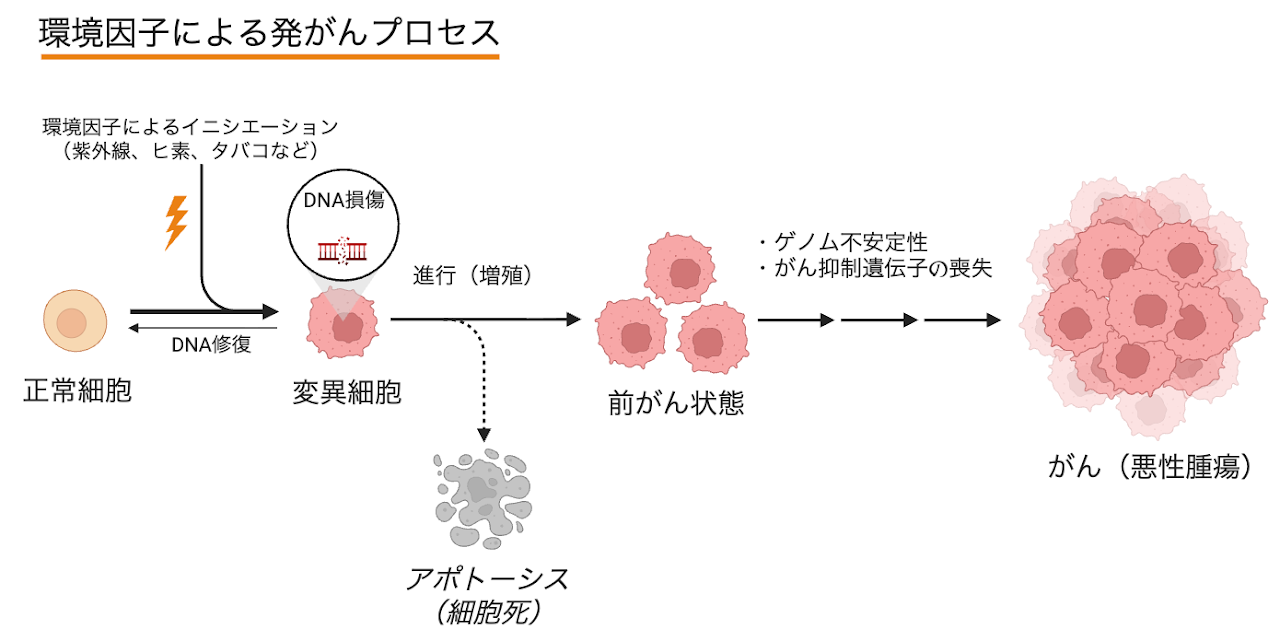
Environmental factors damage DNA, leading to a precancerous state (benign tumor) that can then transform into cancer (malignant tumor). There are still many unknown aspects of the mechanisms by which environmental factors damage DNA and induce cancer, and we are working to uncover these mechanisms.
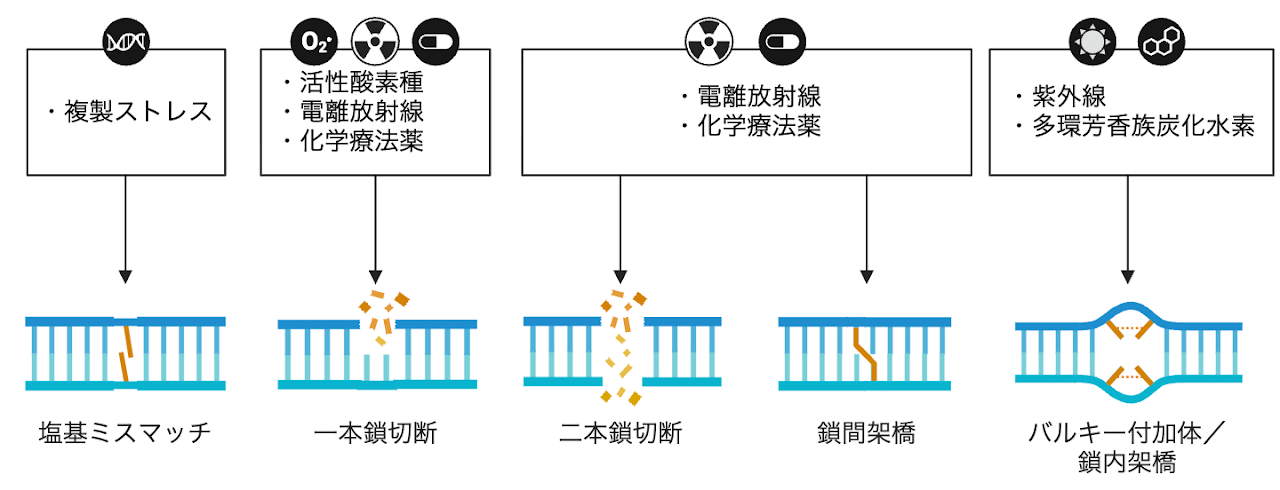
Major Causes of DNA Damage
Ultraviolet radiation induces various skin diseases.
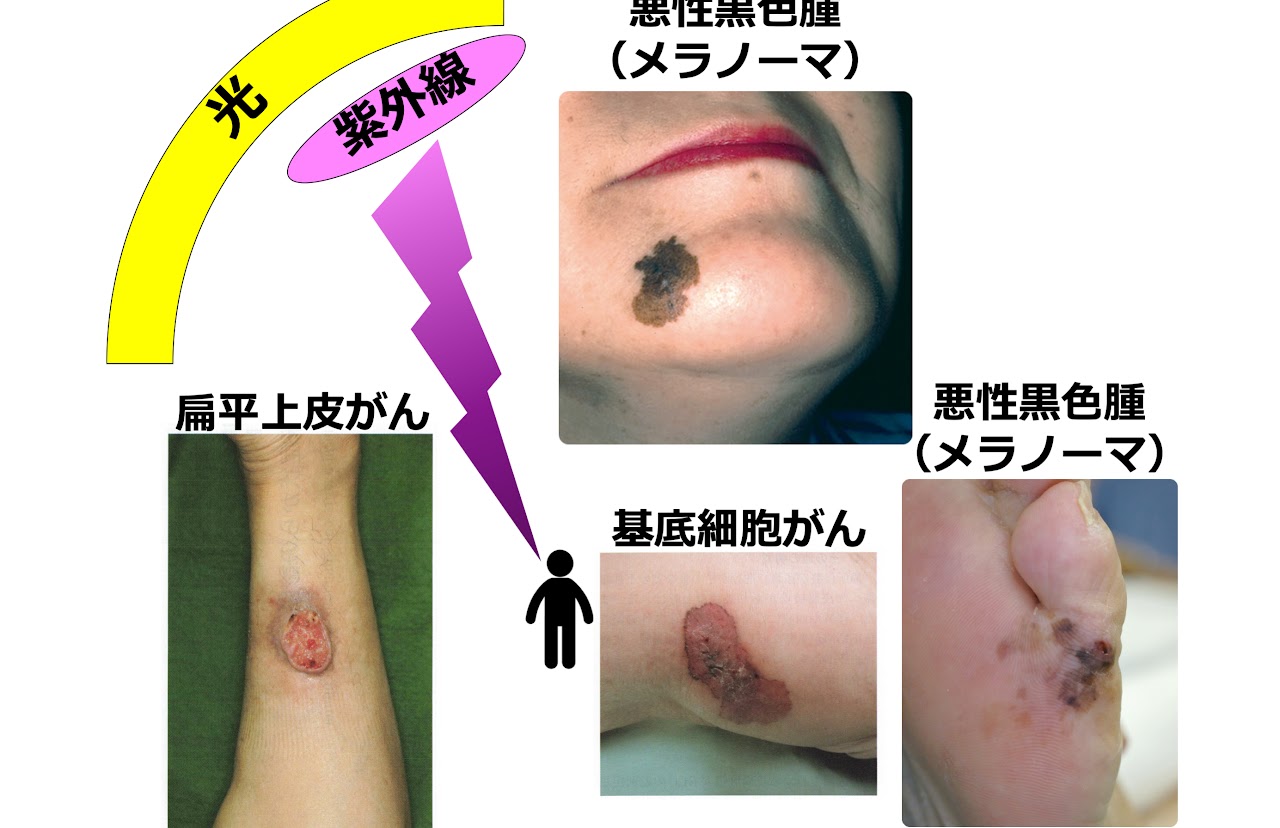
Ultraviolet radiation from the sun is one such environmental factor. When the body (skin) is exposed to it, it causes not only cosmetic issues such as dark spots and wrinkles, but also life-threatening diseases such as keratosis and skin cancer.
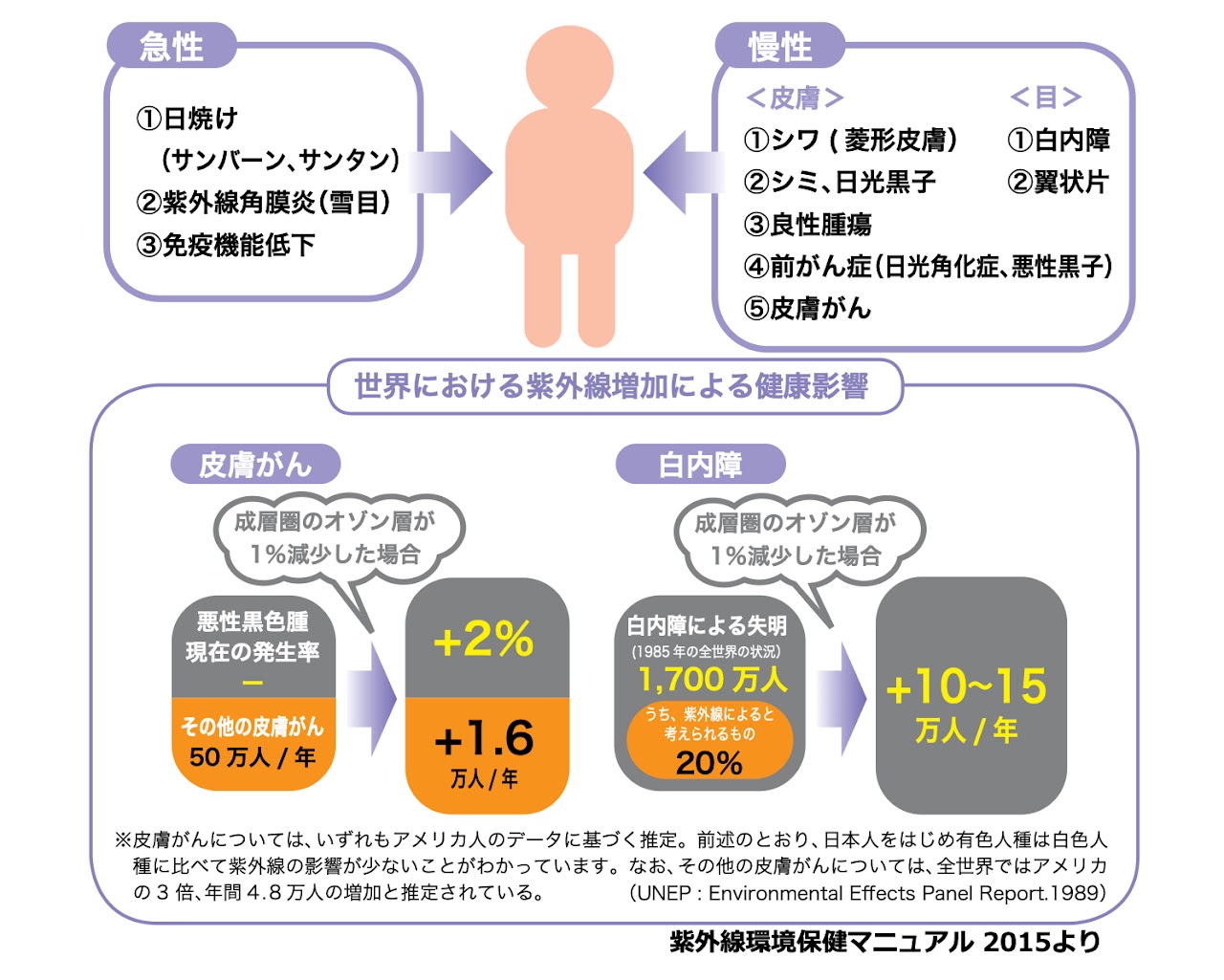
Japan's Ministry of the Environment has made addressing the risks and prevention methods for various UV-related diseases a priority issue.
It is estimated that a 1% decrease in the ozone layer, which serves as a natural barrier against ultraviolet radiation, would result in tens of thousands of additional skin cancer cases annually.
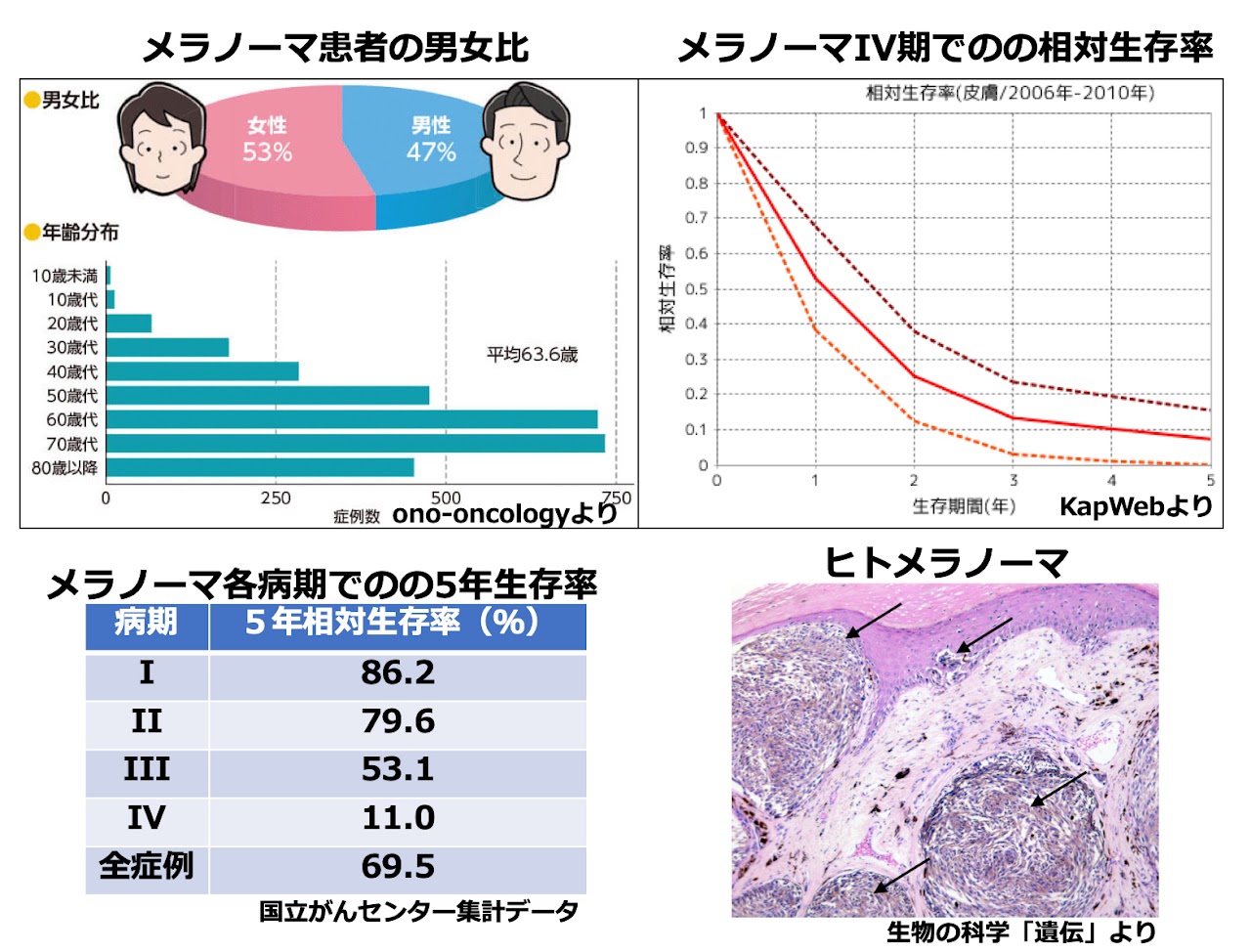
Melanoma is particularly aggressive, with a 5-year relative survival rate of only 11% for Stage IV.