Research ②
Skin Whitening & Vitiligo
Is "making your skin whiter" a good thing? Or not?
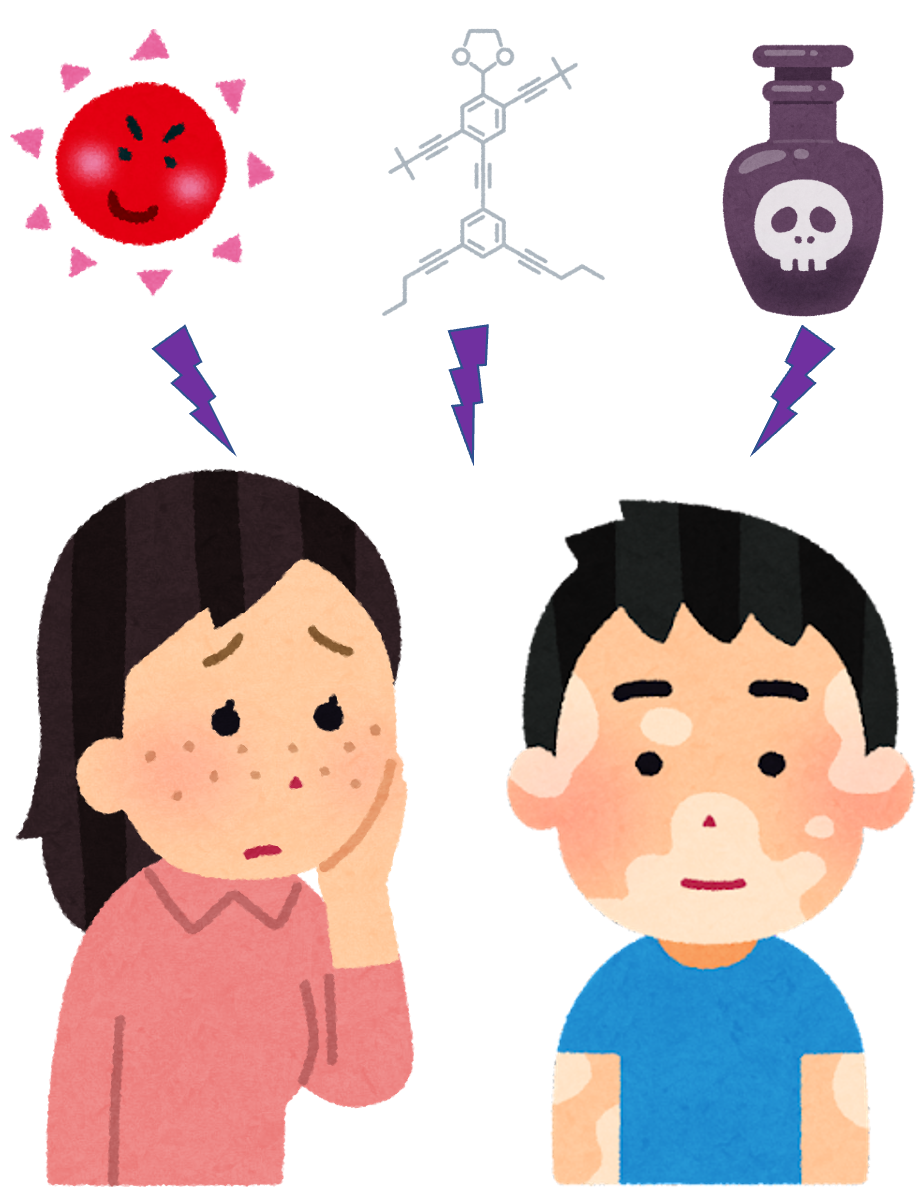
In Asian regions including Japan, there is a strong interest in skin whitening regardless of gender from a cosmetology (cosmetic science) perspective, and the market size continues to expand year after year. This reflects the desire to make skin lighter (reduce melanin pigment).
On the other hand, when the skin becomes lighter in an uncontrolled manner, this results in a skin condition known as vitiligo. Vitiligo is caused by a complex combination of various factors, including excessive use of whitening agents, improper use of medications, and genetic predisposition.
The skin is the frontline barrier separating the self from the outside world.
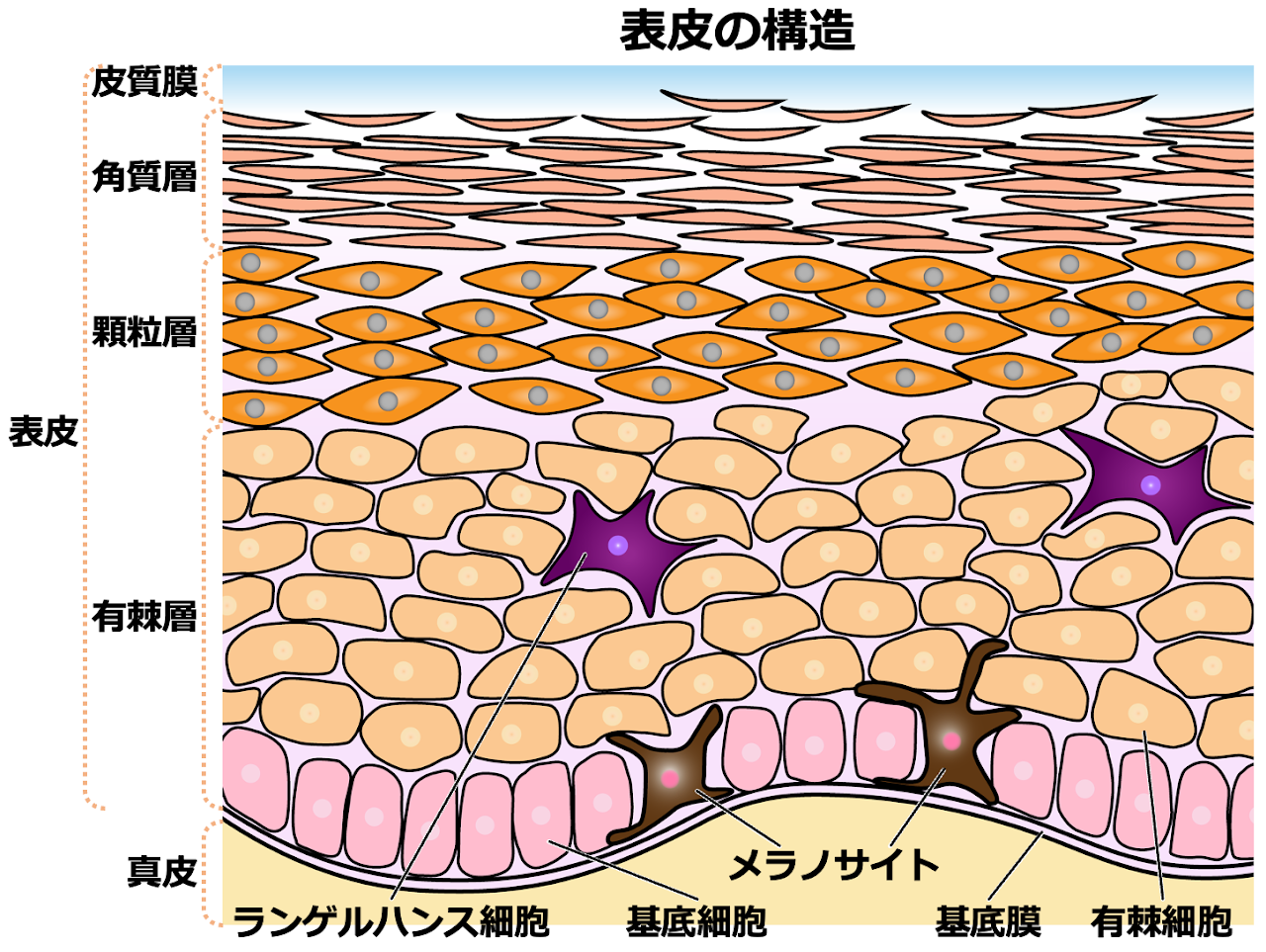
The skin is composed of various types of cells forming layers, which include layers of blood vessels, body hair, muscle, and fat. It is primarily made up of three layers: the epidermis, dermis, and subcutaneous tissue.
The outermost epidermis is further composed of finer layers that prevent the invasion of foreign substances and viruses from the outside world. The majority of the cells that make up the epidermis are supplied by the division of basal cells, and these supplied cells are transported through the spinous layer, granular layer, and cornified layer, ultimately being shed as dead skin. This is what is known as skin turnover (metabolism).
Like other tissues, the skin ages over time and is also subjected to direct external assaults such as ultraviolet radiation, causing it to progressively deteriorate.
We are developing new methods to control melanin pigment levels in the skin.
In our laboratory, we conduct various research projects aimed at controlling "appropriate" levels of melanin pigment from both cosmetology and dermatological medicine perspectives.
Currently, we are investigating the potential of components derived from collagen, which naturally exists in the body, as well as amino acids and their derivatives, to control the amount of melanin pigment.